

Synthetic materials are used in footbags because they deliver consistent performance, lasting durability, and genuine safety advantages that natural materials simply cannot match. The industry term for the outer shell is the “cover,” and synthetic suede or synthetic leather covers are now the standard across skill levels. Whether you’re a parent picking out your kid’s first hacky sack or a freestyle player chasing clean stalls and delays, understanding why synthetic materials used in footbags matter will help you make a smarter choice. Hacksy builds every bag with this knowledge baked in, and this guide breaks it all down for you.
How do synthetic materials enhance footbag control and freestyle performance?
Synthetic materials give you direct control over how a footbag moves, stalls, and responds to your foot. That’s the core reason they dominate modern footbag construction, from beginner bags to professional freestyle gear.
The outer cover material is the first factor. Synthetic suede creates a slightly textured surface that grips your foot on contact. This grip is what makes stalls possible. A stall is when you balance the bag on your foot without letting it drop, and it’s one of the foundational tricks in freestyle footbag. Without surface friction, the bag slides off before you can control it. The SkillAddicts Pro Footbag uses a synthetic suede surface paired with metal filling specifically designed for advanced freestyle tricks and superior control.
The filler inside the bag matters just as much as the cover. Here’s how the three main filler types affect your play:
- Sand filler creates a slow, heavy feel. The bag moves predictably and settles quickly, which is great for learning timing and balance.
- Plastic pellet filler offers a lighter, bouncier feel. It’s a popular middle ground for recreational players who want some responsiveness without the weight of metal.
- Metal filler lowers the bag’s center of gravity and stabilizes movement mid-air. This is the preferred choice for advanced freestylers who need the bag to behave consistently during multi-kick combinations.
Panel count also plays a major role in control. A 32-panel synthetic leather bag achieves great spherical consistency balanced with flexibility for freestyle. The more panels a bag has, the closer it gets to a perfect sphere. A rounder bag sets more predictably, meaning it lands where you expect it to after each kick. However, more panels also mean more stitching, which can add stiffness. The 32-panel count is widely considered the practical sweet spot for freestyle performance.
Pro Tip: If you’re working on stalls and delays, prioritize a synthetic suede cover with metal filler over a plastic pellet bag. The added weight keeps the bag from bouncing away during slower, more controlled moves.
The combination of synthetic suede covers and fillers like metal or sand is the key to footbag playability and durability across skill levels. No single element does the job alone. It’s the pairing of cover texture and filler weight that creates the feel you’re after.
What safety and beginner advantages come from synthetic footbags?
Synthetic footbags are the safest option for beginners and younger players. This is not just a marketing claim. It’s built into the physical properties of the materials themselves.
Synthetic suede is soft to the touch and compresses slightly on impact. When a bag hits your foot, shin, or even your face during a missed kick, the softness of the cover reduces the sting. Compare that to a hard rubber ball or a tightly packed natural leather bag, and the difference is immediate. Gopher Sport’s Freestylin’ footbags are sand-filled, safe, and designed for student use without fear of injury, which is why they appear in school physical education programs across the country.
Here’s what makes synthetic footbags specifically beginner-friendly:
- Slow movement. A synthetic suede, sand-filled footbag weighs around 58 grams and moves slowly enough for new players to track and react to it. Fast bags punish hesitation. Slow bags reward effort.
- Soft impact. The cover absorbs contact rather than bouncing hard off your foot, giving you more time to position for the next kick.
- Non-intimidating size. Most synthetic beginner bags are around 2 inches in diameter, small enough to control but large enough to kick consistently.
- Consistent shape. Synthetic covers hold their shape through repeated use. A bag that stays round is easier to predict than one that warps after a few sessions.
Retailers consistently connect beginner friendliness and safety to synthetic fabrics and gentle fillers, promoting confidence in learning. Parents shopping for a first footbag should look for the synthetic suede plus sand filler combination. It’s the configuration most likely to keep a new player engaged rather than frustrated.
How do synthetic materials compare to natural materials in footbag construction?
Natural leather and natural suede have been used in footbags for decades, and they do have genuine appeal. But when you put them side by side with synthetic alternatives, the differences in performance and practicality are clear.
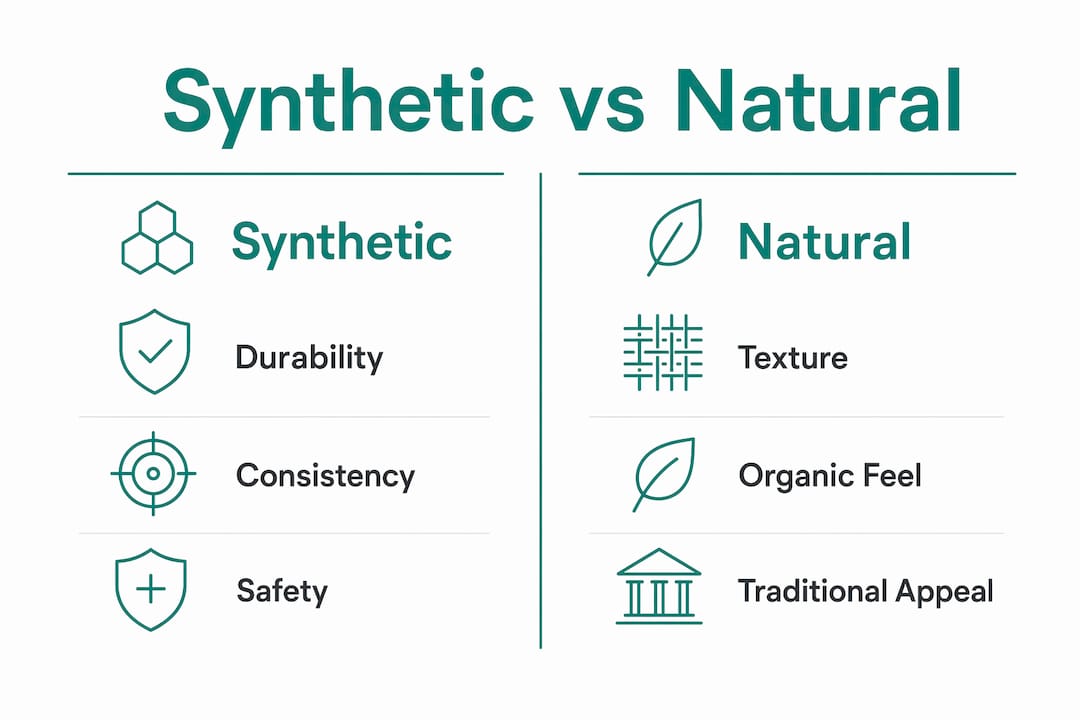
| Feature | Synthetic materials | Natural materials |
|---|---|---|
| Durability | High. Resists wear, moisture, and stretching over time. | Moderate. Can dry out, crack, or stretch unevenly. |
| Consistency | Uniform texture and feel from bag to bag. | Varies by hide quality and tanning process. |
| Break-in period | Minimal. Ready to play out of the box. | Often requires extended use before the cover softens. |
| Maintenance | Low. Wipe clean, no conditioning needed. | Requires occasional conditioning to prevent cracking. |
| Aesthetic | Clean, modern look with consistent color. | Natural grain texture preferred by some traditionalists. |
| Cost | Generally lower for equivalent quality. | Higher cost for quality natural suede or leather. |
Amara synthetic suede holds up better than real suede or cheap fabrics and maintains a consistent feel over time. This matters because a bag that changes feel as it wears forces you to constantly readjust your technique. Synthetic covers stay predictable, which means your muscle memory stays accurate.
Natural materials do have one genuine advantage: texture preference. Some experienced players prefer the organic feel of real leather, especially for net footbag where the bag is kicked back and forth over a net rather than juggled solo. But for freestyle and recreational play, synthetic materials win on every practical measure.
Panel geometry and filler type also affect performance in ways that go beyond material choice alone. A high panel count synthetic bag with the right filler will outperform a low panel count natural leather bag every time. Material is one variable. Design is another. Both matter.
What practical tips help you choose the right synthetic footbag?
Choosing the right synthetic footbag comes down to matching the bag’s specs to your skill level and play style. Here’s a step-by-step approach that cuts through the confusion.
- Start with your skill level. If you’re new to footbag, choose a synthetic suede bag with sand filler. The slow movement gives you time to develop timing and coordination without the bag flying away from you.
- Match filler to your goals. Sand filler suits beginners and casual players. Plastic pellets work well for recreational play and light tricks. Metal filler is for serious freestyle players who need stability during complex sequences.
- Check the panel count. Eight to fourteen panels work fine for casual kicking. If you want to practice stalls and delays, look for 32-panel bags. The rounder shape makes a real difference in how the bag sets.
- Evaluate cover thickness. Thicker synthetic suede holds up longer and provides better grip. Thin covers wear faster and offer less surface texture for stalls.
- Avoid oversized bags. Bags larger than 2.5 inches become harder to control with precision kicks. Stick to the 2 to 2.5 inch range for most play styles.
Pro Tip: Buy two bags at once. Practice with one and keep the other as a backup. Bags wear differently depending on surface and weather, and having a fresh reference bag helps you notice when your main bag starts losing its shape.
A common mistake is buying the cheapest bag available without checking the cover material. Bags labeled simply as “fabric” or “cloth” often use low-grade synthetic blends that wear out quickly and lose their grip within a few weeks of regular play. Investing in a bag with a named synthetic suede cover pays off in longevity and feel.
Key takeaways
Synthetic materials are the right choice for footbags because they combine grip, durability, and safety in a way that natural materials cannot consistently replicate.
| Point | Details |
|---|---|
| Cover material drives grip | Synthetic suede creates the surface friction needed for stalls, delays, and consistent control. |
| Filler determines movement speed | Sand slows the bag for beginners; metal stabilizes it for advanced freestyle tricks. |
| Panel count affects roundness | 32-panel synthetic bags achieve the spherical consistency needed for reliable sets and delays. |
| Synthetic outperforms natural for durability | Amara synthetic suede maintains consistent feel over time, unlike natural suede that can crack or stretch. |
| Beginners need soft, slow bags | Synthetic suede with sand filler is the safest and most effective starting configuration for new players. |
My honest take on synthetic materials in footbag
I’ve spent a lot of time with footbags made from all kinds of materials, and the shift toward synthetic covers is one of the best things that happened to this sport. When I first started, natural leather bags were common, and they felt great once broken in. But “once broken in” is the problem. You’d spend weeks with a stiff bag that fought you on every stall before it finally softened up. Synthetic suede skips that entirely. You open the bag and it’s ready.
What I find most underrated is the safety angle. Parents often worry about whether footbag is appropriate for younger kids, and the honest answer is that a synthetic suede, sand-filled bag is one of the gentlest sports tools you can hand a child. It moves slowly, it’s soft on contact, and it builds real coordination skills without any intimidation factor.
The one thing I’d push back on is the idea that synthetic automatically means lower quality. The best bags I’ve used in 2026 are all synthetic. The Dirtbag footbag from Hacksy is a great example of how synthetic construction done right produces a bag that feels premium, plays consistently, and holds up through serious use. Natural materials have their place, but for most players at most skill levels, synthetic is the smarter starting point and often the permanent choice.
— Owen
Try Hacksy’s synthetic footbags for yourself

Hacksy builds handmade footbags with the kind of attention to material and construction that actually shows up in your game. If you’re ready to feel the difference a quality synthetic suede cover makes, the Dirtbag Hacky Sack is the place to start. It’s designed for players who want real control and a bag that lasts. For those who want to try multiple configurations, the Mystery 6-Pack DirtBag gives you a range of bags to experiment with, and the DirtBag Bundle Pack is perfect for groups, families, or anyone who wants a reliable supply. Browse the full collection at Hacksy and find the bag that fits your play style.
FAQ
Why are synthetic materials used in footbags instead of natural leather?
Synthetic suede and synthetic leather offer more consistent texture, better durability, and require no break-in period compared to natural leather. They also maintain their feel over time, which keeps your technique consistent.
What filler is best for a beginner synthetic footbag?
Sand filler is the best choice for beginners because it creates a slow, soft-moving bag that is easy to track and control. Synthetic suede covers paired with sand filler are specifically recommended for children and new players learning coordination.
How does panel count affect a synthetic footbag’s performance?
Higher panel counts produce a rounder bag, which sets more predictably and is easier to stall. A 32-panel synthetic bag is widely considered the best balance between roundness and flexibility for freestyle play.
Are synthetic footbags safe for kids?
Synthetic suede footbags are soft, lightweight, and slow-moving, making them one of the safest options for children. Retailers like Gopher Sport specifically design and market synthetic suede, sand-filled footbags for student use without injury risk.
What is the difference between sand-filled and metal-filled synthetic footbags?
Sand-filled bags move slowly and are ideal for beginners building timing and balance. Metal-filled bags are heavier, stabilize faster mid-air, and are preferred by advanced freestyle players who need consistent bag behavior during complex trick sequences.