

Quality hacky sack construction is defined by the combination of premium outer materials, expert stitching, balanced filler weight, and a panel design that holds its shape under real play conditions. These signs of quality hacky sack construction separate a bag you’ll use for years from one that splits after a few sessions. Whether you’re picking up your first footbag or upgrading from a cheap mass-produced model, knowing what to look for puts you in control. This guide breaks down every key feature so you can choose with confidence.
1. Signs of quality hacky sack construction start with the outer material
The outer shell is the first thing you touch and the first thing that wears out. Cotton crochet is the gold standard for grip. Hand-crocheted bags made by Guatemalan artisans deliver superior natural grip and durability compared to machine-stitched synthetic bags. That textured surface gives your foot something to hold onto during stalls, which is the move where you balance the bag on your foot without letting it drop.
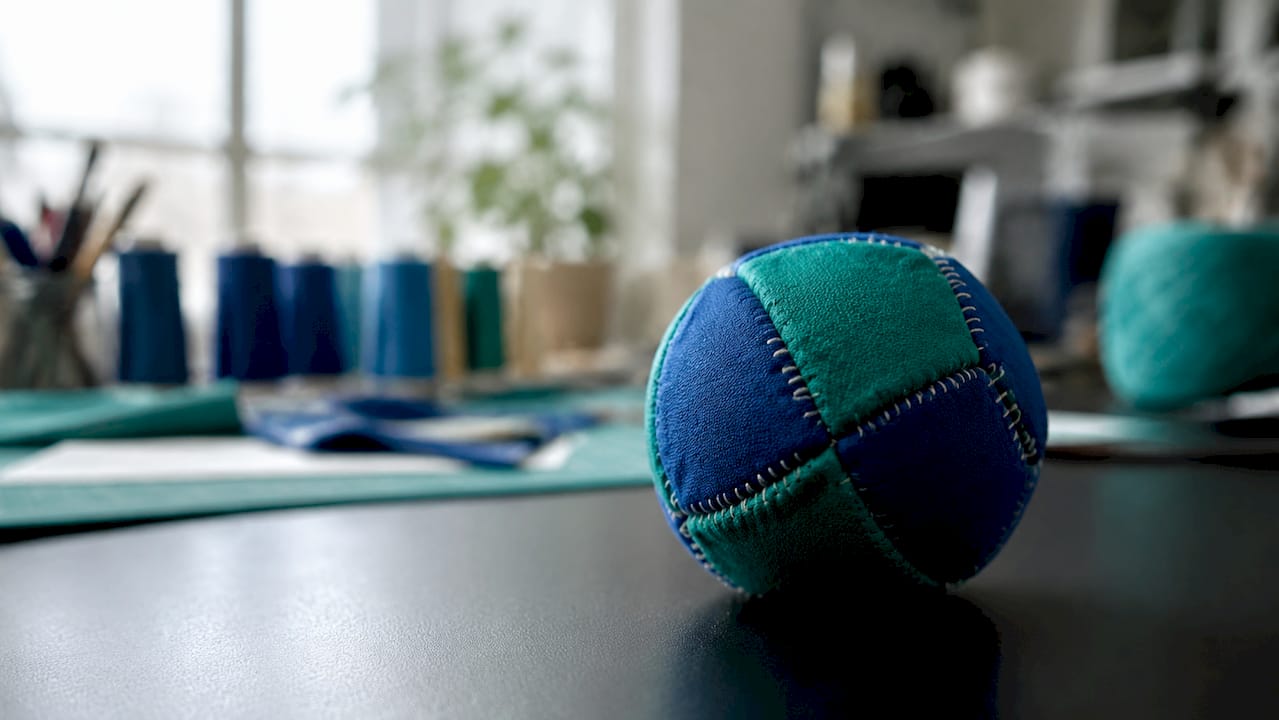
Synthetic suede is the other top-tier option. Synthetic blends add durability compared to cotton and handle varied weather conditions without breaking down. If you play outdoors on a beach or in a park, synthetic suede holds up where cotton might absorb moisture and lose its shape.
Here is a quick breakdown of the main hacky sack material types and where each one shines:
- Cotton crochet: Natural grip, breathable, textured surface for stall control, best for casual and indoor play
- Synthetic suede: Moisture resistant, soft touch, durable across outdoor conditions
- Smooth synthetic leather or nylon: Slick surface for advanced trick transitions, preferred by experienced freestyle players
- Soft suede with ceramsite or polyfoam fill: Lightweight around 30 grams, soft texture with controlled bounce, great for beginners learning their first stalls
Pro Tip: If you’re just starting out, go for a cotton crochet or soft suede bag. The extra grip shaves real time off your learning curve when you’re working on basic stalls and inside kicks.
2. Panel count and shape: how design affects performance
Panel design is one of the most overlooked quality hacky sack features. The number of panels directly affects how round the bag stays, how predictably it flies, and how long it holds its shape.
The 32-panel design is the industry standard for premium freestyle footbags. More panels mean a rounder bag, and a rounder bag means more consistent flight. When the bag is perfectly round, it responds the same way every time you kick it, which matters a lot when you’re working on repeatable tricks.
Here is a comparison to help you decide which panel count fits your play style:
| Panel count | Best for | Shape retention | Control level |
|---|---|---|---|
| 32 panels | Freestyle and advanced play | Excellent | High precision |
| 14 to 18 panels | Beginners and casual play | Good | Easier to manage |
| 6 to 8 panels | Basic recreational use | Fair | Lower precision |
Fewer panels mean larger seam sections, and larger seam sections are more likely to split under repeated stress. If you’re buying a bag for serious practice, the 32-panel construction is worth the extra cost. For beginners, a 14-panel bag gives you enough stability to learn without the bag rolling unpredictably.
3. Filler material: what’s inside matters as much as the outside
The fill inside a hacky sack controls its weight, bounce, and how it responds to your foot. This is one of the clearest signs of a durable hacky sack because cheap bags use inconsistent or low-quality filler that shifts around and ruins the bag’s balance.
- Plastic or poly pellets: Preferred in professional freestyle for precision and smooth transitions. Lightweight and consistent, they give the bag a firm but forgiving feel.
- Sand filler: Adds weight and stability. Sand-filled bags sit lower to the ground after a kick, which makes them easier to control for beginners working on stalls.
- Metal shots: Used in advanced footbags for low bounce and high precision. These bags drop fast and require real skill to keep in the air.
- Ceramsite or polyfoam: A beginner-friendly option that keeps the bag light and soft, reducing foot fatigue during longer sessions.
The best construction for hacky sacks often uses a combination of fillers. A pellet and sand blend, for example, gives you the bounce control of pellets with the added weight stability of sand. When you pick up a bag and it feels evenly weighted in every direction with no lumps or shifting, that is a sign the filler is high quality and well distributed.
4. Stitching quality: the detail that determines lifespan
Stitching is where most cheap bags fail first. A bag can look great on the outside and fall apart within weeks if the stitching is weak. High-quality stitching, including hand-stitching and continuous crochet, prevents leaks and extends the lifespan of a hacky sack significantly.
The best bags use one of two approaches. Hand-stitching allows the maker to reinforce stress points individually, which is why artisan-made bags from places like Guatemala tend to outlast factory-produced alternatives. Continuous crochet construction takes a different approach by eliminating seams entirely.
Stitchless or continuous crochet hacky sacks eliminate seam weak points, increasing longevity compared to machine-stitched sacks that are prone to splitting. No seams means no single point where the bag can split open under pressure. That is a major advantage if you play frequently or on rough surfaces.
When you inspect a bag, look for tight, even stitching with no loose threads. Pull gently at the seam between two panels. A quality bag will not give at all. A weak bag will show slight separation even before you start playing.
Pro Tip: Run your thumb along the seam line of any bag before you buy it. If you can feel a gap or the thread feels thin, put it back. That seam will fail faster than you expect.
5. Size and weight standards: the numbers that define control
Knowing the right size and weight for your skill level is one of the most practical parts of learning how to choose a hacky sack. A bag that is too heavy tires your foot out quickly. A bag that is too light bounces unpredictably and is hard to stall.
Ideal beginner footbags measure between 2.0 and 2.6 inches in diameter and weigh 40 to 60 grams. That range gives you enough mass for controlled flight without putting strain on your ankle and foot during extended practice. Staying within this range means the bag responds to light kicks without requiring you to overpower every touch.
Advanced players often prefer slightly heavier bags in the 60 to 80 gram range because the extra weight makes precision kicks more rewarding and reduces the effect of wind during outdoor play. The key is matching the bag’s weight to your current skill level, not the level you want to reach.
6. Shape retention: a sign the bag is built to last
A quality hacky sack holds its round shape after hundreds of kicks. Shape retention is directly tied to panel count, filler density, and the tightness of the outer shell. When a bag starts to flatten or develop a lopsided feel, it means the construction has broken down.
Bags with higher panel counts and tightly packed filler maintain their shape far longer than low-panel bags with loose fill. You can test shape retention by squeezing the bag firmly and releasing it. A well-built bag springs back to its original round shape immediately. A poorly built bag stays dented or takes several seconds to recover.
Shape retention also affects flight predictability. A bag that stays round kicks the same way every time, which is exactly what you need when you’re building muscle memory for new moves.
7. Surface texture: grip you can feel
Surface texture is a quality hacky sack feature that directly affects your ability to stall and control the bag. A smooth bag slides off your foot. A textured bag stays put long enough for you to set up your next move.
Textured crochet surfaces provide superior natural grip and tactile feedback, which is especially important for beginners mastering stalls and control. The texture creates friction between the bag and your shoe or bare foot, giving you a split second more contact time on each touch.
Synthetic bags can replicate this texture through embossed patterns or micro-suede finishes. Run your fingers across the surface of any bag you’re considering. It should feel slightly rough or nubby, not slick. That texture is doing real work every time the bag lands on your foot.
8. Durability against different play surfaces
Where you play matters as much as how you play. A bag built for gym floors will wear out fast on concrete or packed dirt. The best construction for hacky sacks accounts for the play surface by using materials and stitching that resist abrasion.
Synthetic suede and tightly crocheted cotton both handle outdoor surfaces well. Smooth leather or nylon shells are better suited to indoor play where the surface is forgiving. If you play on rough ground regularly, look for bags with reinforced base panels or thicker outer shells at the contact points.
A good rule of thumb: the rougher your play surface, the more you should prioritize stitching quality and outer material durability over softness or grip texture alone.
Key takeaways
A quality hacky sack is defined by the combination of its outer material, panel design, filler type, stitching method, and size standards working together to deliver consistent performance and long-term durability.
| Point | Details |
|---|---|
| Material choice drives grip | Cotton crochet and synthetic suede outperform smooth shells for stall control and durability. |
| 32-panel design is the standard | More panels mean a rounder bag, more consistent flight, and longer shape retention. |
| Filler type controls feel and bounce | Poly pellets suit freestyle precision; sand and ceramsite blends work best for beginners. |
| Stitching determines lifespan | Continuous crochet or hand-stitching with no seam weak points outlasts machine-stitched bags. |
| Size and weight must match skill level | Beginners perform best with bags measuring 2.0 to 2.6 inches and weighing 40 to 60 grams. |
What I’ve learned from years of picking up and putting down hacky sacks
Most recreational players focus entirely on how a bag looks and completely ignore how it’s built. I made that mistake early on. I bought a bright, eye-catching bag that fell apart at the seams within a month because the stitching was machine-made and the panels were too few to hold their shape under daily play.
The shift that changed everything for me was learning to feel a bag before I bought it. Squeeze it. Pull at the seams. Roll it in your hand and check if it stays round. These are the same checks a craftsman would do, and they take about 30 seconds.
One thing most articles skip over is the filler combination. A bag with a single filler type, whether all pellets or all sand, will always feel one-dimensional. The bags I’ve enjoyed most use a blend that gives you firmness on impact and weight stability in the air. That combination is harder to find in mass-produced bags, which is why handmade options from artisan makers consistently outperform factory alternatives in real play.
My honest recommendation for recreational players: do not buy the cheapest bag you can find and do not buy the most technical freestyle bag either. Find something in the middle that uses a natural or synthetic suede shell, has at least 14 panels, and uses a pellet or blended fill. That bag will last, feel good, and actually help you improve.
— Owen
Ready to play with a bag that’s actually built right?
If you’ve read this far, you know what separates a quality hacky sack from a throwaway one. Hacksy builds every bag with exactly these standards in mind: premium materials, tight construction, and a feel that holds up whether you’re on a beach, in a park, or in your backyard.
The Hacksy Dirtbag is built for players who want durability and real control without overpaying for a professional-grade freestyle bag. If you want variety or you’re buying for a group, the mystery 6-pack and the bundle pack give you consistent quality across multiple bags at a better value. Head to Hacksy and find the right bag for your skill level and play style.
FAQ
What are the top signs of quality hacky sack construction?
The clearest signs are tight, even stitching with no loose threads, a round shape that springs back after being squeezed, and a panel count of at least 14 for beginners or 32 for freestyle play. Premium outer materials like cotton crochet or synthetic suede are also reliable indicators of a well-built bag.
What filler is best inside a quality hacky sack?
Plastic or poly pellets are the most popular choice for freestyle play because they provide consistent weight distribution and smooth transitions. Beginners often do better with a sand or ceramsite blend that adds stability and reduces bounce.
How do I choose a hacky sack for the right size and weight?
Beginners should look for bags measuring 2.0 to 2.6 inches in diameter and weighing 40 to 60 grams. This range gives you enough mass for controlled flight without tiring your foot during practice sessions.
Does panel count really affect how a hacky sack performs?
Yes. A 32-panel bag stays rounder under repeated play, which means more predictable flight and better shape retention over time. Lower panel counts are easier to manage for beginners but wear out faster and lose their shape sooner.
Why does stitching matter so much in hacky sack construction?
Stitching is the most common failure point in cheap bags. Continuous crochet construction eliminates seams entirely, removing the weak points where splitting typically starts. Hand-stitched bags allow reinforcement at stress points, which is why artisan-made bags consistently outlast machine-stitched alternatives.