

Documenting footbag tricks videos is one of the fastest ways to improve your skills, spot your own mistakes, and connect with a growing global community. Footbag, the sport commonly known as hacky sack, has two main formats: freestyle footbag (individual tricks and stalls) and footbag net (a volleyball-style competitive game). Knowing which format you are filming shapes every decision you make, from equipment to editing. Viral social media content has driven a full-on resurgence of the sport among Gen Z players in 2026, with platforms like YouTube and TikTok hosting thousands of footbag performance clips that teach, inspire, and build community at the same time.
What equipment do you need to document footbag tricks videos?
The right gear makes the difference between shaky, unusable footage and crisp clips you can actually learn from. You do not need a professional camera setup to get started. A modern smartphone, a basic tripod, and good natural light will cover you for most beginner and intermediate recordings.
| Equipment | Recommended Option | Why It Matters |
|---|---|---|
| Footbag (beginner) | Starter kick bag | Softer feel, easier to control for basic kicks |
| Footbag (advanced) | 32-panel pro bag | Better roundness and flight consistency for stalls |
| Camera | Smartphone or action cam | Slow-motion mode is key for trick breakdowns |
| Stabilizer | Compact tripod | Keeps framing steady so you can review form |
| Learning app | SkillAddicts | Structured tutorials from stalls to expert combos |
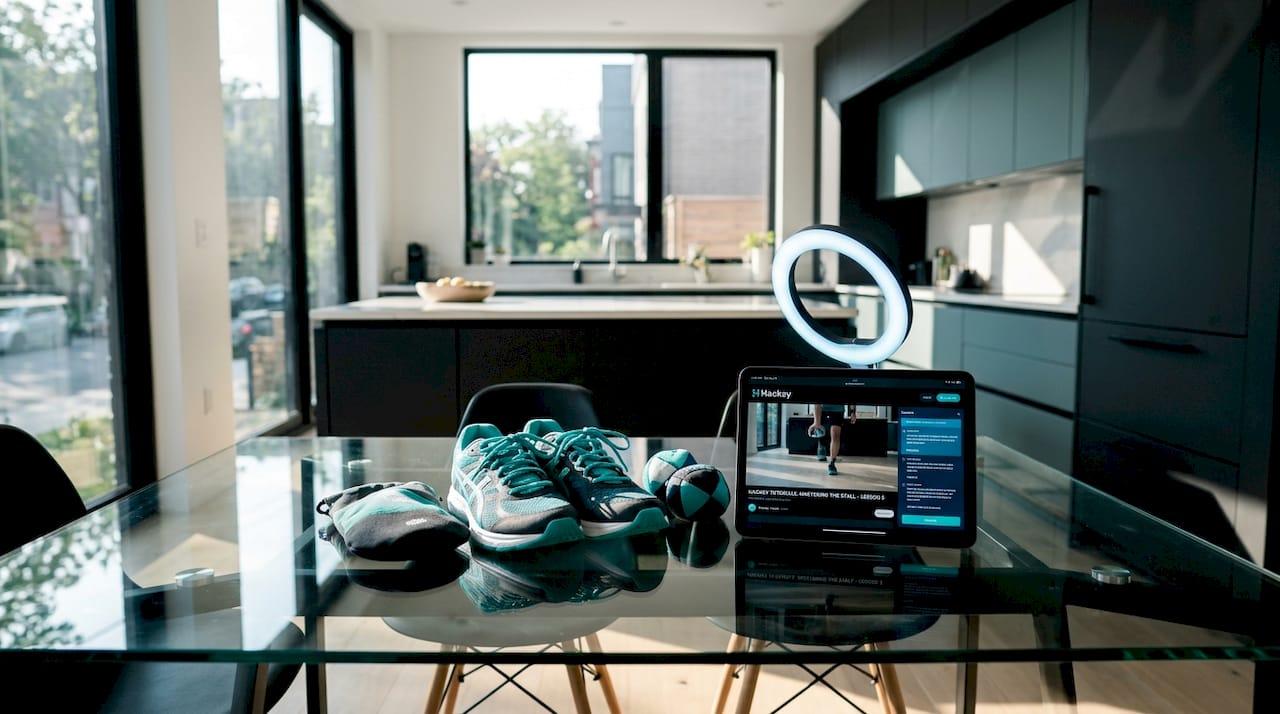
Experienced players prefer 32-panel footbags for advanced stalls because the extra panels create a rounder, more consistent flight path. That consistency shows up clearly on video, making it easier to analyze your technique. Beginners, on the other hand, benefit from using a softer starter bag that forgives early footwork errors.
Dual bag sets that include both a starter kick bag and a pro stall bag give you a structured path to document visible progress. You can film yourself with the starter bag first, then switch to the pro bag as your control improves. That contrast in footage becomes a motivating progress log over time.
Pro Tip: Lace your shoes using a wide toe-box method before filming. Opening up the toe area increases your contact surface with the bag, which directly improves stall catches and makes your tricks look cleaner on camera.
How do you film footbag tricks for the best visual impact?
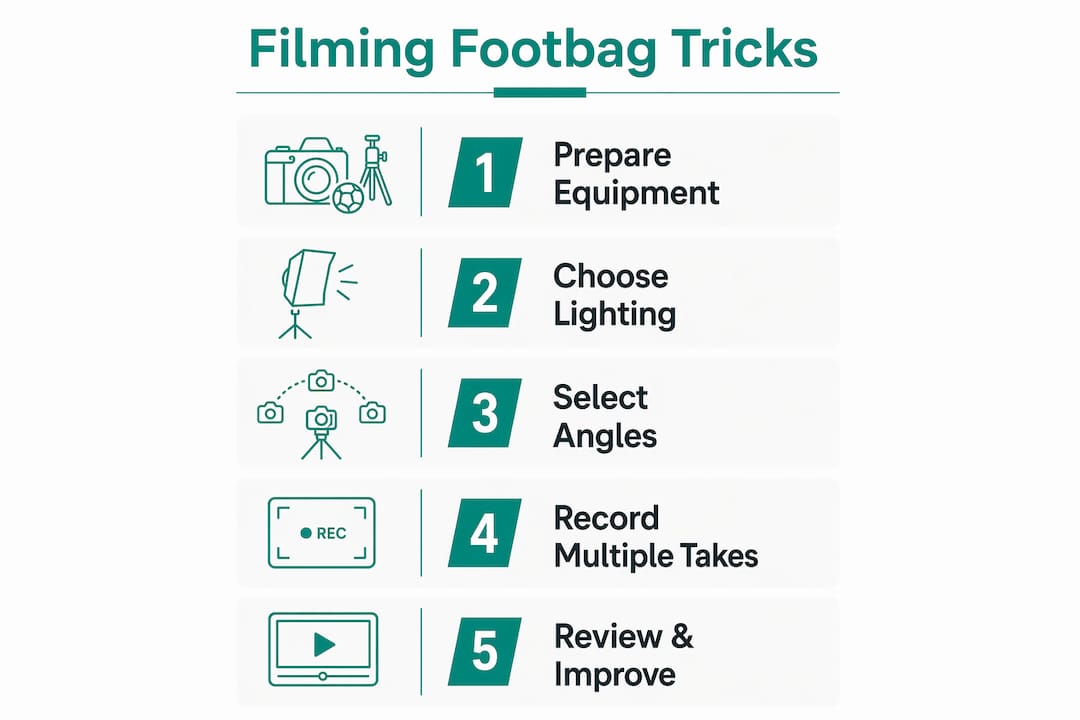
Good footage is not just about the camera. It is about preparation, angles, and knowing what you want to capture before you press record. Follow these steps every time you set up a filming session.
- Choose a clean background. A plain wall, an open park, or a gym floor works best. Busy backgrounds distract viewers from your footwork.
- Set your camera at knee-to-hip height. This angle captures the full range of foot movement without cutting off the bag or your upper body.
- Film a warm-up sequence first. Starting with slow drills like kicking back and forth for 10 to 20 minutes builds coordination and gives you usable footage of your baseline form.
- Switch to slow-motion for complex moves. Most smartphones shoot at 120 or 240 frames per second. Use this for inside kicks, heel stalls, and toe stalls so you can review every contact point.
- Record multiple short takes. Aim for clips of 15 to 30 seconds each. Short clips are easier to review, easier to share, and easier to compare over time.
- Review immediately after filming. Watch the clip before you pack up. If your form looks off, you still have time to correct it and re-shoot.
Common mistakes include filming in direct overhead sunlight, which creates harsh shadows across your feet, and placing the camera too far away, which makes the bag nearly invisible. Both problems are easy to fix with a quick test shot before your real session starts.
Pro Tip: Use close-up shots for trick breakdowns. Film a second angle from directly in front of your foot to capture stall positions that a side-on shot misses entirely. Two angles per trick gives you far more useful feedback than one.
Where can you find the best footbag tutorial videos and learning apps?
The quality of your learning resources determines how fast you progress. Random searching on YouTube can work, but structured resources get you to advanced footbag tricks much faster.
Freestyle footbag and footbag net are distinct formats, and the tutorial videos for each look completely different. Freestyle tutorials focus on individual stalls, combos, and flow sequences. Footbag net tutorials focus on serving, spiking, and court positioning. Picking the wrong type of how-to footbag videos wastes practice time, so identify your format first.
Here are the best resources for structured footbag skills training:
- SkillAddicts app: The SkillAddicts platform offers a progression from basic stalls to expert combos, with structured lessons that build on each other. It outperforms random video searching for long-term development.
- TikTok creators: Accounts like @hackysacktrav post freestyle tricks videos that regularly hit hundreds of thousands of views. These clips are great for inspiration and seeing what advanced moves look like in real time.
- YouTube channels: Search for “freestyle footbag tutorial” to find longer instructional content. YouTube works best for detailed breakdowns of specific tricks.
- Facebook groups and Reddit communities: These are underrated for finding niche tutorial clips shared by experienced players who do not post on mainstream platforms.
Bag control is the foundational skill for all footbag tricks, and the best tutorial videos reflect that by starting with toe, inside, and heel stalls before moving to combinations. If a video skips straight to showy combos without explaining the stall mechanics, it is not the right resource for building real skill. Use tutorial videos as a supplement to your own filmed practice sessions, not a replacement.
What are the best practices for sharing your footbag videos online?
Sharing your footage is where skill development meets community. Posting your clips creates accountability, invites feedback, and connects you with players who can push your game forward.
- Choose your platform based on your goal. TikTok works best for short trick clips and reaching new audiences. YouTube suits longer tutorials and progress compilations. Facebook groups and Discord servers are better for direct feedback from experienced players.
- Tag your videos with specific trick names. Use terms like “inside kick,” “toe stall,” or “clipper combo” in your titles and descriptions. Specific tags help the right viewers find your content and give you more useful comments.
- Post consistently, not perfectly. One clip per week beats one polished video every two months. Consistency builds your archive and shows real progression over time.
- Name your files with dates and trick names. A simple system like “2026-06-15-toe-stall-practice” makes it easy to track your progress and find specific clips when you want to compare old and new footage.
- Create a private progress playlist. Keep a YouTube or Google Drive folder of your raw clips organized by month. Watching three months of footage back to back is one of the most motivating things you can do when progress feels slow.
Pro Tip: Reply to every comment on your first ten posts. Early engagement signals to platform algorithms that your content is worth showing to more people. It also builds real relationships with other players in the footbag community.
Key takeaways
Documenting footbag tricks videos with the right equipment, filming technique, and structured learning resources is the most direct path to measurable skill improvement and community growth.
| Point | Details |
|---|---|
| Use the right bag for your level | Start with a soft kick bag, then move to a 32-panel pro bag as your stall control improves. |
| Film at knee-to-hip height | This angle captures full foot movement and makes trick analysis far more useful. |
| Use structured apps over random searches | SkillAddicts provides a clear progression path that random YouTube browsing cannot match. |
| Know your footbag format | Freestyle and footbag net require completely different tutorial videos and filming approaches. |
| Archive with dates and trick names | Organized footage lets you track real progress and stay motivated through plateaus. |
Why video changed everything for my footbag practice
I started filming my footbag sessions mostly out of curiosity. I thought I was landing my inside kicks cleanly. The footage told a different story. My plant foot was rotating outward on every kick, which was killing my consistency on stalls. I never would have caught that without the video.
That is the honest value of documenting your tricks. Your body lies to you. The camera does not. Once I started reviewing footage after every session, my progress compounded in a way that years of casual practice never produced. The feedback loop is tight and immediate, which is exactly what skill development needs.
The community side surprised me too. Posting clips, even rough ones, brought in comments from players who had solved the exact problems I was struggling with. One comment about shoe lacing, specifically widening the toe box, shaved weeks off my learning curve on heel stalls. That kind of specific, experience-based advice does not show up in generic tutorials.
My honest advice: do not wait until you are “good enough” to start filming. Start now, post early, and let the footage and the community do the work. The players who improve fastest are not the most naturally talented. They are the ones who practice stalls and footwork with honest feedback every single session.
— Owen
Level up your footbag game with Hacksy
If you are serious about filming and improving your footbag tricks, the bag you use matters more than most players realize. Hacksy makes handmade footbags built for real control, whether you are working on your first toe stall or chaining together advanced combos for your next video.
The Mystery 6-Pack DirtBag set gives you six premium bags to experiment with, so you can find the weight and feel that works best for your trick style. For players who want a single go-to bag built for advanced stalls and freestyle sequences, the Dirtbag footbag delivers the consistency your footage deserves. Visit Hacksy to find the right bag for your next session and start building a trick video archive you are proud of.
FAQ
What does it mean to document footbag tricks videos?
Documenting footbag tricks videos means recording your practice sessions and trick attempts to review your form, track progress, and share clips with the footbag community. It is a structured approach to skill development that combines self-analysis with community feedback.
What type of footbag is best for filming advanced tricks?
Experienced players use 32-panel footbags for advanced stalls because the extra panels create better roundness and flight consistency, which shows up clearly on camera and makes trick analysis more accurate.
Which apps are best for learning footbag tricks with video?
The SkillAddicts app is the top structured resource for footbag tutorial videos, offering a clear progression from basic stalls to expert combos. It outperforms random YouTube or TikTok searching for players who want a defined learning path.
How often should I post my footbag tricks videos online?
Posting one clip per week is more effective than waiting for a polished video. Consistent posting builds your progress archive, signals activity to platform algorithms, and generates the community feedback that accelerates skill development.
What is the difference between freestyle footbag and footbag net videos?
Freestyle footbag focuses on individual tricks, stalls, and flow combinations, while footbag net is a competitive volleyball-style sport. Tutorial videos for each format are completely different, so identifying your format before searching saves significant time.